Julie Morrigan
  • Home
  • Books
  • LISTEN

Q&A: Gary Carson

4/2/2012

1 Comment

 
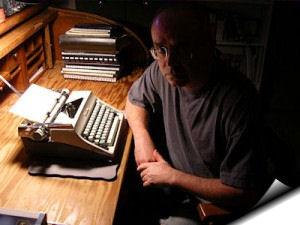
_Today's guest is Gary Carson, who created a scandal in Junior High School with a lurid James Bond ripoff that landed him in the counsellor’s office and was eventually read by the entire faculty, including the school nurse. After such a brilliant start, he followed a chequered path that led him, eventually, to Blasted Heath, who have recently published his debut novel, Phase Four.
Picture
_Tell me about your book.

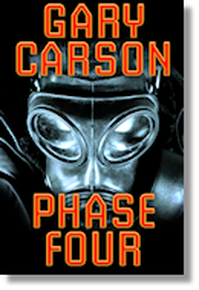
Phase Four is a complex, apocalyptic thriller about a conspiracy to establish total control over the human mind.


What was your motivation for writing it?

I write for money and pleasure, but so far I'm not making any money and trying to write at a professional level is so hard on my tiny brain that I think I'd get more pleasure out of banging my head against a wall. So the whole thing makes perfect sense.


How long did it take you to complete?

Years and years. I actually had to write another novel first. It morphed into the first version of Phase Four through some weird alchemical process and I had to rewrite that version multiple times before the sucking sound the manuscript made receded to an acceptable level.


What's your favourite part of the creative process?

I've always enjoyed rewriting the same paragraph a hundred times only to realize that it still stinks and that I don't really need it anyway.


How much difference does an editor make?

In my case, all the difference in the world. I've been lucky in that regard.


How important is a good title?

It's critical, I think. You need a title that will grab people's attention and get them to at least read the back-cover blurb and maybe a few opening paragraphs. Someone told me that prospective home buyers make up their minds about a house in the first ten seconds. With books, I think the decision is probably made in microseconds.


How important is a good cover?

Very important. The cover should be irrelevant, but it isn't. I don't buy books just because I like their covers, but if I don't like the cover, I'm less inclined to buy the book, especially if the cover is one of those movie spinoff deals with a big picture of Brad Pitt running away from a slow-motion fireball. It's embarrassing to have something like that lying around the house.
Picture
_What are your views on e-book pricing?

As a reader, I like cheap books. As a writer, I want to make as much money as possible, but I can see the benefit in low prices. I'm a complete unknown and more people are likely to take a chance on my stuff if they don't have to take out a second mortgage to do it. Also, I've read that writers are getting a better deal, percentage-wise, with a 99-cent self-published Kindle book on Amazon than they would with a traditional publisher. I would point out, though, that even 99-cent e-books are more expensive than the old paperbacks that used to be widely available. For example, my 1965 Signet paperback of Moonraker only cost 50 cents and Ian Fleming was able to make a pretty good living with prices like that. The devaluation of the currency (among other things) has had a disastrous effect on the industry.


What aspects of marketing your book do you enjoy?

I'm still learning this whole marketing thing. Right now, I'm pretty bad at it. I have a lot of trouble writing synopses, for instance. At the moment, I can't say I enjoy any of it, but it has to be done and writers have to learn how to do it well if they want anyone to actually take the time to read their manuscripts.


How do you feel about interviews?

I like them because they give me a chance to blather on and on as well as promote my books, and they give me the illusion that my opinions actually matter.


How do you feel about reviews?

At the moment, I'm so obscure that I'm happy to get ANY kind of review, pro or con.


Where do you find out about new books?

Amazon. Bookstores. Libraries. Word of mouth.


What are you reading now?

Just finished Alexander the Great by Phillip Freeman and now I'm re-reading Moonraker by Ian Fleming.


What makes you keep reading a book?

Tight, fast, descriptive writing. Original ideas. Atmosphere. Fantastic plots presented realistically, if that makes any sense. The slightest whiff of political correctness is the kiss of death.


What are you currently working on?

I just ‘finished’ another apocalyptic disaster thriller called Machine which is going to need more work and I'm currently working on another thriller called Monster Story.


How can we keep up to date with your news?

I have a writer's blog at gcarson.typepad.com/gary_carson (still need to register a domain name) where I try to post current news. I also run two other blogs, an ancient history site called The Ancient World Review and a new conspiracy-oriented blog called Ominous Planet.


Other than writing/being published, do you have a claim to fame?

My ability to stumble through life in a daze is legendary.


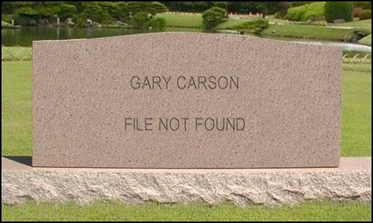
What would your epitaph be?

FILE NOT FOUND

Picture
Thanks for a great Q&A, Gary.

Phase Four is available from Amazon in the UK and the US.

1 Comment

Q&A: Damien Seaman

28/1/2012

1 Comment

 
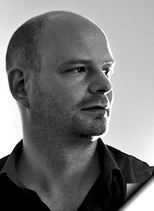
_Today's guest is Blasted Heath author Damien Seaman. A former journalist, editor, parliamentary assistant, financial analyst, factory worker and security guard, Damien’s short crime fiction, interviews and reviews have featured on numerous ezines and blogs. Damien has travelled widely, including repeat visits to Russia and the Middle East. He has lived in Berlin, Brussels and Benghazi as well as various cities in his native Britain. He spent two years working in European politics, firstly as an assistant to a member of the European Parliament, and latterly as editor of a trade newspaper with a focus on EU legislation.

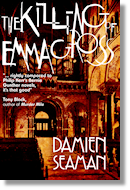
He also has a fear of camels, but he doesn’t like to talk about it. Thankfully he's not as reticent when it comes to The Killing of Emma Gross, his debut novel.

Picture
_Tell me about your book.

The Killing of Emma Gross is a historical police procedural based in Düsseldorf in 1930. It’s about a detective who gets caught up in the case of a notorious serial killer – based on the real-life Peter Kürten murders of the time – and who risks his career to uncover the truth behind a murder that most of his colleagues are happy to let said serial killer take the rap for.


What was your motivation for writing it?

I lived in Berlin for several years and fell in love with the place. Having done a history degree that ended up dampening a lot of my enthusiasm for the subject, living in Berlin awoke my passion for the past and made me want to write about what happened there. I was also reading a lot of noir and hardboiled crime at the time, and I wanted to marry the sensibilities of American hardboiled literature with the expressionist movies and art of early 20th century Germany. When I decided to look for a real life murder case to base my story on, the most compelling one was that of Peter Kürten – the so-called Vampire of Düsseldorf – so I ended up pouring all of my inspiration about Berlin into a novel about Düsseldorf instead.


How long did it take you to complete?

The version of the story that ended up being published probably took around four months to write and another three to edit. But the research and the aborted earlier versions and stories that didn’t come off? That’s gotta be three years. Maybe more.


What's your favourite part of the creative process?

Coming up with story ideas is the most important – that is, taking an idea from just being an idea to being a workable plot. But also the research – I like finding out stuff that most people don’t know and then trying to work it in to the story. Of course, an awful lot of the research ends up being cut out, otherwise it would unbalance the story. It’s a tough one to call for historical fiction: some readers will always want more historical detail while others will find it intrusive. Getting that balance right is the biggest challenge of historical fiction.


Picture
_What are your views on e-book pricing?

I think print publishers have been shitting on customers by making them pay the cost of the VAT on e-books. After all, all the cost of that book has gone into producing the print version, with very little extra cost involved in producing an electronic version. Adding VAT on top is inexcusable and just shows contempt for e-book readers.


What aspects of marketing your book do you enjoy?

Turns out my favourite bit is blogging. The networking angle of Twitter and so on is good too, but for me writing interesting blogs that people want to read is most gratifying. After all, I am a writer and I like it when people enjoy reading what I write.


How do you feel about reviews?

Important to help readers work out if a book is the sort of thing they might like, and it’s good when people take the time to give their opinion of a book. It’s interesting how Amazon in particular has changed the way reviews work. Individual reviews are much less important than they used to be and now it’s all about the aggregate view or score. In fact, we’ve got to the point where reviews don’t really matter unless they’re on Amazon, which is convenient in a way but also kind of scary. Thank God for the book bloggers out there willing to do both – write reviews for their blogs AND post them on Amazon.

What are you currently working on?

Right now, a novella about a dirty little murder of a Nazi brownshirt in Berlin in 1932 that threatens to ignite the city in an orgy of street violence if detectives can’t solve it in time …


How can we keep up to date with your news?

Best way is either to follow my blog or @Damienseaman on Twitter, or to check in with the Blasted Heath website.


Other than writing/being published, do you have a claim to fame?

When I was nine years old, I came second in a national poster design competition arranged through schools. I won a cheque for £50 which was presented to me in person by the late British TV presenter Bob Holness. My gran had a framed photo of this for years.


Thanks, Damien, for a great Q&A. And that's a fine claim to fame!

The Killing of Emma Gross is available from Amazon in the UK and the US.

1 Comment

Q&A: Anthony Neil Smith

21/1/2012

0 Comments

 
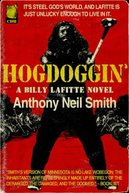
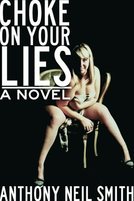
In what's turning out to be something of a Blasted Heath-a-thon, Anthony Neil Smith is today's guest. He's the Director of Creative Writing at Southwest Minnesota State University, and the publisher of the crime ezine Plots with Guns. He is also the author of Psychosomatic, The Drummer, Yellow Medicine, Hoddoggin’, Choke On Your Lies, and All The Young Warriors.

He describes himself as shy and grumpy. He doesn’t drink much but he acts like he does online.

Instead of the tough guy crime writer we all know and love, he’s scared of all the shit he writes about. He wouldn’t want to be in these situations.

As for the fucked-up sex and relationships … well, they say 'write what you know'.

Neil likes tacos.

He likes steaks.

He likes pizza.

And they came back to bite him in the ass.
Picture
_Tell me about your book.

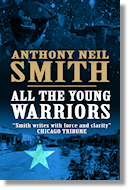
It’s All the Young Warriors, a thriller from Blasted Heath. It involves a couple of young Somali-Americans living in Minnesota who are recruited to fight in Somalia for a terrorist army, while a cop and the father of one of those boys try to find out what happened to them.


What was your motivation for writing it?

There actually is a story about twenty or so young Somali men in Minneapolis who 'disappeared', only to show up in Mogadishu as terrorists. I imagined they didn’t know what they were getting into. Minnesota has a very large Somali population, and I wanted to show a distinct difference between the world of the country they left, many having to flee as refugees, and their new adopted state where they’ve had a big cultural impact.


How much difference does an editor make?

I think it makes a world of difference. While we authors have this entire world mapped out in our heads like auteur film directors, we need an editor to tell us how it looks to them. That 'second sight' can help me see the things I hadn’t noticed before. Many times we might assume the audience understands our intentions, but then the editor can show us where we aren’t communicating as well, or maybe shows us we don’t need to explain so much after all.


How important is a good cover?

Vital. I love book cover art, especially when it helps set the mood before I even read the first page. It’s a bit like those new apps that make photos look old, the Hipstamatic and Instagram. The cover sets the stage for what lens - the mood and color and feel - we set up in our minds as we get into the novel. When I can glance at a cover for a book I’ve read and instantly feel the world click into place all over again, I know the art did its job. And I’ve been lucky with e-book art, having Ben Springer, Erik Lundy, and JT Lindroos on my side. Kick-ass work.


Picture
_What aspects of marketing your book do you enjoy?

I like Twitter more than I should, I guess, for marketing. It seems to work, and it allows me to play with this online persona I have going for me. Some people get annoyed, but those people are pricks and can go follow Ashton and Demi or some shit like that instead of me. So when people read the books now and then reach out to discuss them with me, I’m really excited by it. It helps me push forward on the next book in the series or the next project. I also like discovering where the new readers are. So the fact that I get to 'play' while I’m marketing is what’s so fun about it.


How do you feel about reviews?

Good ones are wonderful. Bad ones are even better. Really, while I hope I don’t get too many bad ones, I like the ones in which the critic actually seems personally offended that I even wrote this. Like I set out to ruin their day! Especially good are the clueless ones where all of the things the critic claims not to like are actually the things that are good, solid literary technique. Ha.

Bring on the reviews. Be honest. And remember that Amazon reviews really do help us struggling writers.


What makes you keep reading a book?

I’ve got to care about what the central character wants. That’s why I get bored with a lot of typical P.I. and cop books. It’s got to bring something special. Also, voice is a big thing. A good story can keep me reading, but a good story told in a unique voice can keep me riveted.


Picture
_What are you currently working on?

I’m working on the third Billy Lafitte novel (after Yellow Medicine and Hogdoggin’), which sort of rounds out a trilogy, but I’m trying to decide what direction to take Billy next. Prequels? Back to 1st person? I’ve got a lot of thinking to do.

I’m also mapping out the beginnings of the next Octavia VanderPlatts novel (after Choke On Your Lies), which I will get started on after Lafitte’s first draft is done, and also once we hit the 1500 mark on sales of the first one. We’re close to 1100 right now.

And (yes, a lot on my plate), I would like to bring back some of the characters from All the Young Warriors for another tale.


How can we keep up to date with your news?

I’ve got a website, or you can follow me on Twitter at @DocNoir.


What would your epitaph be?

Probably a sign saying something like: 'Please do not park directly on top of grave'.


Picture
Thanks for an entertaining Q&A - and good luck with the workload!

ANS's books may be found at Amazon in the UK and the US.
And, as a bonus, Psychosomatic is free this weekend (21 & 22 Jan) for Kindle. Go get it!
0 Comments

Q&A: Gerard Brennan

14/1/2012

1 Comment

 
Kicking off a new round of Q&As in the new year, I'm delighted to welcome Gerard Brennan, a prolific writer from Northern Ireland who is currently published by both Pulp Press and Blasted Heath. His short stories have appeared in a number of anthologies, including The Mammoth Book of Best British Crime 9. He co-edited Requiems for the Departed, a collection of crime fiction based on Irish myths which won the 2011 Spinetingler Award for best anthology. He is currently studying at Queen's University Belfast for the MA in creative writing.
Picture
_Tell me about your book.
My novel, WEE ROCKETS, has just been released by Blasted Heath. It does for Belfast what Irvine Welsh’s Trainspotting did for Edinburgh. It’s a frank look at the drink and drug-addled youth ejected onto the streets of a socially deprived community as they smirk in the face of authority and play Russian Roulette with their adolescent lives.

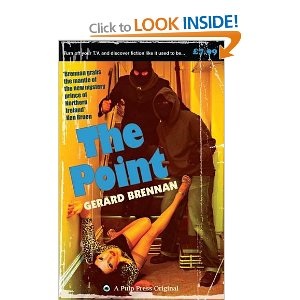
And I have a novella out (seems only fair to mention it as it was released just a few months ago through Pulp Press) titled THE POINT. For Brian, a new life in The Point means going straight and falling in love with Rachel, while Paul graduates to carjacking by unusual means and ‘borrowing’ firearms from his new boss. Brian can’t help being dragged into his brother’s bungling schemes but Rachel can be violently persuasive herself ...


How much difference does an editor make?
For me? A huge difference. I need the reassurance that the book is good. If it’s not good, I need to know why. Then I can fix it.


What are your views on e-book pricing?
I think an e-book should be priced lower than a paperback version of the book but high enough that the hard-working author gets a decent cut (though low pricing for marketing reasons seems sensible to me too). At the moment, the pricing issue is all over the place but I think it’ll find its level eventually; probably around the £2.99 — £3.99 mark, but I’m really just guessing.


What aspects of marketing your book do you enjoy?
Pretending I’m working when what I’m really doing is communicating with like-minded people. It’s fun and guilt-free.


Picture
_How do you feel about interviews?
I like them. Thanks for letting me do this one.


How do you feel about reviews?
The positive ones are great. Who doesn’t like being complimented? The negative ones can sting but once in a while you’ll get something useful from them.


What are you reading now?
Cold, Cold Ground by Adrian McKinty. I’m actually rereading it. It’s that good.


How can we keep up to date with your news?
I have a website, blog and Twitter account. Check them out and revisit whichever one floats your boat. Or you can check my page on the Blasted Heath website.


Picture
Thanks for a great Q&A, Gerard. I wish you continued success with your writing career.

Gerard's books may be found on Amazon in the UK and the US, and direct from the publisher.

1 Comment

Q&A: Tony Black

23/12/2011

1 Comment

 
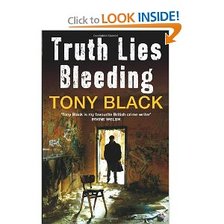
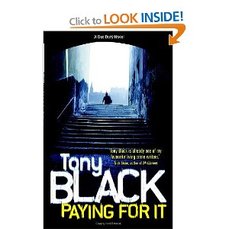
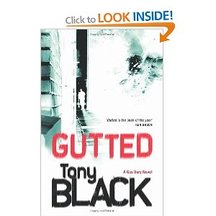
_Today I'm delighted to welcome Tony Black, author of the highly acclaimed Gus Dury series (Paying For It, Gutted, Loss, and Long Time Dead) and a police procedural, Truth Lies Bleeding. He was in a bit of a state when he stopped by, having just read about the Krankies and their exploits after seeing them in panto. ('It's behind you!' 'I know - get a bloody move on!') After I'd given him a cup of hot, sweet tea laced with whisky to steady his nerves, we talked about what he's been up to lately.
Picture
_Tell me about your book.

Which one? I suppose the most recent is Truth Lies Bleeding which features a DI, but I'm loathe to call a police procedural. It probably is, but if I had to think about 'procedure' at any point writing it I'd have spewed on the keyboard. There's a murder, quite a nasty one, and a psychologically-damaged cop using the case as a means to reconnect with the world he's fallen out of sorts with. DI Rob Brennan is back in Murder Mile next year, mid-April, but before that there's a wee heist caper called RIP Robbie Silva that I wrote for Danny Hogan's Pulp Press.


What was your motivation for writing it?

Truth Lies Bleeding was my way of getting as far from possible from raving-lunatic alky Gus Dury ... Brennan is a family man who refuses to drink with colleagues. He's as far from Dury as I could imagine getting. And after nursing Dury through four novels I could imagine getting quite frickin far ...


What's your favourite part of the creative process?

The actual writing ... putting words down on the page. Erm, creating, I suppose. Sorry, smart arse answer, I know ...


Picture
__How much difference does an editor make?

Well, in the early days, quite a bit. My first editor was my first agent and I can still remember her asking me where the plot was? My latest book, Murder Mile, went from my RH UK editor to the proofreader with precisely zero changes. I was beyond chuffed about that because no matter how happy you are, there's always a nagging feeling that you're deluding yourself and your editor is about to tell you so. That said, I wouldn't publish as much as a par' without another pair of eyes on it.


How important is a good title?

Very. I sweat buckets over them.


How important is a good cover?

Very. I sweat buckets over them.


How do you feel about reviews?

It's a double-edged sword. My books are not fat truck-stop thrillers and it does piss me off when reviewers are clearly annoyed by this and go on about 'but so-and-so doesn't do it like that'. I had a lot of comparisons to Ian Rankin because the books are set in Edinburgh — which is very flattering — but in all honesty my writing is not a bit like his, and if a reviewer's first line is 'Well, it was actually nothing like Rankin ...' it shits me that they've kind of missed the point. All that aside, the crime genre has some of the most insightful reviewers around and I've always been well served by them. People like Ali Karim and Jeff Kingston Pierce made a real difference to my early works getting noticed and I'm grateful to them.


Picture
_ What makes you keep reading a book? And, what are you reading now?

I'm beginning to wonder about that myself after abandoning so many bad books this year. I think, more than anything, it's a voice I care about and characters I'm interested in. I'm less moved by plot as a device, but there certainly has to be a story — some reason for the characters interacting on the page. The setting can be here or there for me, I'm not all that choosy. I do like small-town American noirs, but I do like inner-city Brit noir too.

In the last year or so I've been moved by Ray Banks's Gun and by Allan Guthrie's Bye Bye Baby — both seemed to possess a kind of alchemy that kept me hooked from beginning to end. They're both short works — though by no means small — an indication perhaps that less is more. They packed a lot into those pages, and both writers made me think, it seemed, without really trying. Always a good sign ...


What are you currently working on?

I'm serialising a novella for a Scottish newspaper, it's called The Storm Without. It features a bashed-up PI called Doug Michie and it's set in my home town of Ayr on Scotland's west-coast. I grew up there and recently moved home after trooping all over the world. It's been interesting re-connecting with the place and putting down those observations. I'm actually writing the story week-to-week, too, and tackling the serialisation process has been an eye opener for me. The Storm Without's going to be published after the serialisation (about May 2012, I think) in paperback by Pulp Press and in e-book by Blasted Heath.


How can we keep up to date with your news?

Crimewatch UK is a good start ... or Pulp Pusher or my website.


Picture
Great stuff, thanks, Tony.

Tony's books are widely available, including at Amazon in the UK and the US. Those of you lucky enough to get a Kindle for Christmas know where to click first. (And if you don't, you can always pick up a 'proper' book instead.)

That's it for this year's author Q&As, but they'll be back in the new year. Many thanks to all those who have taken part so far.

1 Comment

Q&A: Ed Lynskey

17/12/2011

5 Comments

 
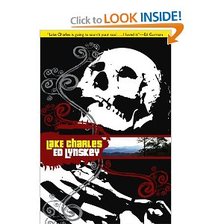
_Ed Lynskey is an American poet, critic, and novelist, writing mostly crime fiction. He was born in Washington, D.C. where he still lives and works. His creative work has been widely reviewed and compared with that of James Lee Burke, Daniel Woodrell, and Robert Crais. Ed took the time to answer some questions recently, and talks here about books and writing.
Picture
_Tell me about your latest book.

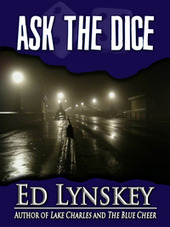
My latest crime noir Ask The Dice (Crossroad Press) is about a hit man named Tommy Mack Zane. It takes place in the Virginia suburbs of Washington, D.C. Tommy Mack at middle-age is contemplating his retirement and getting out of the bloody business. His organized crime boss then, it appears, frames him for a murder, and bad things unravel from that point. Tommy Mack calls on the help of a few friends. I prefer for my protagonists to have loyal friends and/or family because I don't like the lone wolf seen going at it.


What was your motivation for writing it?

It was pretty straightforward. I wanted to take the hit man trope and put my own spin on it. The story had to remain plausible while it was unpredictable. The heavy use of back story plays a big part in the character development to show why Tommy Mack is what he is.


What are you currently working on?

I'm doing the final edits to a small town cozy mystery series. The title is Bermuda Canard and it features my two late aunties, Isabel and Alma Trumbo, as a pair of senior amateur sleuths. The first title, Quiet Anchorage, was popular enough to be my third bestselling title. That and the variety they provide in my writing schedule were enough to motivate me to extend the characters and their capers into a series. I hope readers will continue to enjoy the cozies. I'm grateful to the readers for taking a chance on Quiet Anchorage since my previously published novels were all noir and hardboiled. The reviews and reader comments were generally positive ones. I'd had some writing experience by selling multiple stories to the Dorchester Media True magazines, so my writing the cozies wasn't that much of a leap for me.


How important is a good title?

I probably attach too much significance to the book title, but I like to pick an original one. Ask The Dice is an excerpt from a conversation between Marilyn Monroe and John Huston at the Reno craps table during the filming of her last motion picture, The Misfits (1960). I like the association since both individuals were prominent in the film noir heydey. Marilyn plays the radiant girlfriend (uncredited, I believe) in The Asphalt Jungle. Anyway, that's how I came up with Ask The Dice title.


How important is a good cover?

Since I possess no artistic talent whatsoever, I depend on the cover designers to come up with the eye-catching artwork. So far, I've liked all but one of my front covers.

The design on that cover is misleading to readers, I believe. I just tell the artist my ideas, and they go off and do their thing, and it usually works out just grand.


Picture
_What's your favourite part of the creative process?

Doing the spadework (outline, character names, plot twists, etc.) and then writing the first draft are what I groove on the best. The revision cycles are a grind to me until I get nearer the end point where I feel lots of relief to be finished with it all.


What are your views on e-book pricing?

Since all my books have been brought out by publishers I have no connection with other than as the author, I don't control or influence the pricing. Ninety-nine cents to $4.99 seems to be a good range. This lean economy makes any book priced higher just wishful thinking, at least as far as my book sales are concerned.


What aspects of marketing your book do you enjoy?

I like meeting my different readers online and in person. I'm not sure what really works in selling books, but I have found making the promotional effort takes up scads of my time if I let it. Twitter and blogging are the two newer venues I've taken up. My twitter ID is @edlynskey. My Cracked Rearview Mirror blog is on Good Reads.
 
Thank you, Julie, for inviting me to participate in your ‘Q&A Feature’ on your website. It's been fun.


Picture
Thank you, Ed, for a great Q&A.

Ed's books are available at Amazon in the UK and the US.

5 Comments

Q&A: Sean Patrick Reardon

14/12/2011

3 Comments

 
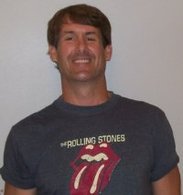
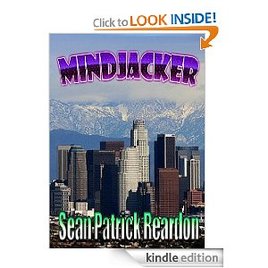
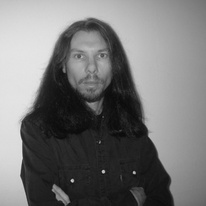
_Sean Patrick Reardon lives in Pepperell, Massachusetts with his wife, two children, and Ragdoll cat. He's usually reading at least one novel on any given day, loves coaching and playing lacrosse, following cricket, and listening to rock 'n' roll music. He's also a cracking writer and has written not only some great short stories, but also a novel, Mindjacker (here's my two penn'orth). I'm a big fan of Sean's writing, so it was a pleasure to catch up over a Q&A.
Picture
_ Tell me about your book.

My novel, Mindjacker, would best fit into the crime thriller genre and the style is one that I really enjoy reading myself. It’s the kind of story where characters are introduced to the reader and expanded upon during the course of the story and they all intersect, until some of them are left standing, maybe, in the end. There are a couple themes running throughout, like rock-n-roll and right to life, as well as many hidden and not so obvious clues and wordplay related to the theme. I love Guy Ritchie’s crime movies and others that have storylines that are similar. You know, ones that focus on the bad guys, and all the trials and tribulations they go through trying to pull off the caper.


How do you feel about interviews?

I love doing them. I’m a pretty outgoing guy and enjoy public speaking. But written interviews are just as enjoyable. I love reading interviews by other authors just as much. In this modern technological world we live in, it is so cool when I get to learn more about an author, the person, and not just their writing. I have never met any of the authors I read, admire, or blog with, but the web provides an excellent way to feel a kinship with them.


How important is a good title?

I think it is very important, and in most cases it is a big reason why I give a book a chance if I’m trolling book sites. A good title, especially if it is relevant to the story, will get me to read the description. Now, who knows if Mindjacker is a good title, but I thought it sounded cool and it is relevant to the story.


What makes you keep reading a book?

Many things keep me interested, but character and dialogue are the big items that will keep me reading. The story has to be fast moving, without long passages of text that don’t have dialogue to break it up. Lots of police procedural and forensic jargon will lose me really fast. Believable bad guys, clever crimes, and corrupt cops or ones who don’t abide by the rules, will pretty much keep me hooked on a story. Drug use, profanity, and violence done right are always welcomed, but nothing slows down the action for me more than needless sex scenes.


Picture
_ What would your epitaph be?

Here lies Sean Patrick Reardon: Good son, grandson, brother, husband, father, uncle, and friend. The dude tried to live the golden rule, or at least gave it his best shot. He’s off to the eternal lacrosse field, listening to rock-n-roll, and giving all the mortals a hang-loose sign.


Other than writing/being published, do you have a claim to fame?

In my younger days, it would be infamous, but let’s not go there. I am the president of a youth lacrosse program, and even at 46 years old, I can still play the game well against whippersnappers half my age. I can also drive a scooter around Bermuda like nobody’s business.


How can we keep up to date with your news?

I try to use my blog as the main home base, and I’m on Facebook as well. I have a Twitter account, but rarely use it. I just read a blog post on an agent site where they mentioned that blogging was ‘so 2008’. I think the person who wrote that has their head up their ass and is the same one saying e-books and e-publishing is a dangerous move. With blogs, you are not limited to a certain amount of characters you can type, and there are still many great blogs out there, so I’ll stick to that.


What are your views on e-books?

I love e-books, and it has got to the point, with me at least, that paper books have become a real pain in the ass, in a lot of ways. I don’t need to have a bookshelf to impress people with all the books I have read, or have a burning desire to feel and smell a book. E-readers, like the Nook I have, let me have all the books I want to read with me at all times. The price saving has been tremendous, and I can get a title in a matter of seconds.

Thanks for having me Julie. You’re a good friend and a terrific writer, who has inspired me!


Picture
Thank you, Sean, and thanks for a great Q&A!

Sean's books are available from Amazon in the UK and the US, and from Smashwords.

3 Comments

Q&A: Leon Steelgrave

10/12/2011

0 Comments

 
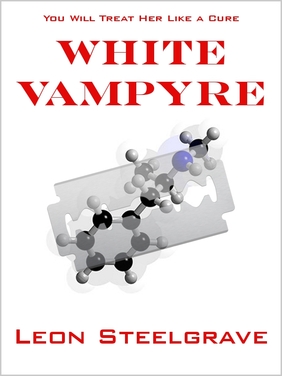
Today I'm delighted to welcome writer Leon Steelgrave to the blog. Raised and educated in what he describes as a town of narrow streets and even narrower minds, Leon was afforded plenty of opportunity to hone his acerbic wit. That's something that has stood him in good stead ever since, not least in his writing career. With Leon's debut novel White Vampyre due out in a matter of days, it's the ideal time to ask him some questions not only about the book, but also about his future plans.
Picture
_Tell me about your book.

White Vampyre is ostensibly a dystopian Sci-Fi novel, but with elements of both crime and horror genres. It centres on the protagonist’s drug addition, personified by Lady Methedrine, the titular White Vampyre. It’s fast, abrasive and violent, although I like to think that there’s some social commentary within the text too.


What was your motivation for writing it?

Back in the day, I would have said something about art. These days, I’m just in it for the chicks and the money!

But seriously, I wanted to explore drug addiction in a manner that avoided moralising but showed the destructive side of loving something to the exclusion of all other considerations.


How much difference does an editor make?

I’m informed it can make a world of difference, but to date I’ve not had much experience of working with an editor. I was involved with a would-be new publishing venture a few years back but as no one was on salary, I found the amount of effort the editors put in to be variable. Additionally, while there were a number of valid criticism and points made which undeniably improved the book, there were some suggestions that struck me as being more akin to censorship. I particularly remember being asked to change the dialogue of a female character who, in the midst of dumping her boyfriend informed him: ‘You’re never gonna fuck my little pussy again!’ Apparently, this was not a credible thing for a woman to say. Personally, I’ve heard a lot worse in my time, but perhaps the common denominator there was that the women in question were involved with me …

At present, I edit my own work with the input of comments from a couple of close and trusted friends. How well it’s working will, I guess, be proved by the reaction to the books.


How important is a good title?

I spend a good deal of time agonising over titles, so it’s an important consideration for me. Fear & Loathing In Las Vegas, A Scanner Darkly, Heart Of Darkness — instantly recognisable and, most importantly, they resonate in the psyche.

One of deal breakers with the publisher above was their insistence that I change the title of White Vampyre to The Sword Of Damocles on the grounds that it sounded too much like a horror novel. I went along with it for a good while, but in retrospect I would have regretted putting the book out under that title.


Picture
_What are your views on e-book pricing?

There are obviously good reasons for e-books to be cheaper than their physical counterparts — no printing or material costs, no warehouse storage or transportation, no shelf space within a shop, all of which, set against the costs of an online shop and space on someone’s server, are going to drive the cost down. Although I’ve not decided yet, in all likelihood, I’ll price my books at the bottom end of the scale. Better, I think, to reach ten thousand people at 86p a book than six hundred at £6.99.

Despite owning (and loving) a Kindle, I remain rather ambivalent about e-books, largely because I’m from a generation used to physical product. A well-bound hardback book is a thing of beauty, although I’m the first to concede that being able to carry several hundred books around in a portable device is equally wonderful in its own way. In a similar fashion, I couldn’t imagine being without my iPod, although when I’m at home I prefer to play vinyl, CDs and even cassettes!

Returning to e-books, I read recently that their sales overtook that of physical books in the US for the first time this year. If that’s what it takes to keep people reading and by extension writers in a job, I’m not going to complain.

It might sound like some sort of joke, but I’m quite serious when I say that one of the things that saddened me most about the riots in London this summer were the reports of Waterstone's being left unscathed! I find it troubling that we have raised a generation for whom books have no value. Although not nearly as sad as the fact that we allow an obscene number of children to leave primary education without basic literacy. How can we have gone so wrong, and, more importantly, what needs to be done to correct it?


What aspects of marketing your book do you enjoy?

For me, the downside to self-publication is the marketing! Running a web site, Facebook account, Twitter account, whatever the hell is the latest hot social media account, all takes time away from writing. Not that I don’t appreciate the input of people who have enjoyed my work, but I’m sure they would like to have more of it and delivered more quickly. That said, I’m planning to shoot a promo video for White Vampyre. I have no money, no equipment and no experience — naturally, I’m looking forward to it immensely.


How do you feel about interviews?

That rather depends on who is asking the questions and what the questions are! I have a very low frustration threshold and am not someone who suffers fools gladly. I freely admit that these are not particularly desirable character traits, but unfortunately that’s just the way I am.


What are you reading now?

Ian Rankin's The Impossible Dead. It’s the second of his Inspector Malcolm Fox series, and while it’s something of a departure from Rebus, the character is as well defined and credible as you’d expect from Rankin. He’s the master of plot, although Stuart MacBride is starting to give him a run for his money, albeit in a more fantastical fashion. I’m planning on getting stuck into his Shatter The Bones next.


What makes you keep reading a book?

Plot and good characterisation. A character or characters that you can grow to love or loath over the course of a series always appeals to me.


What are you currently working on?

A sequel to White Vampyre called Though Your Sins Be Scarlet. A version has existed for a number of years but requires extensive revision in line with the recent changes I’ve made to the e-book edition of WV. It fleshes out a number of the supporting characters in addition to continuing the main narrative. I also have a Norse based fantasy novel, Web Of Wyrd, which I really need to do something with, and a novel set during the First World War. I had great hopes for the latter but the initial draft has proved disappointing, so it’s probably best that I let it sit for a year or two before coming back to it.


Having said all that, my next book will be A Pauper's Shroud, a police procedural set in Inverness. Readers will find a teaser included in the new edition of White Vampyre. I'm working on the final edit and hope to have it out by the end of February.


How can we keep up to date with your news?

The usual social media, plus my website.


What would your epitaph be?

Sell by date? That’s just a guide …


_Thanks, Leon , for an interesting and informative Q&A.

Leon's books are available from Amazon in the UK and the US. The link currently shows an earlier paperback edition of White Vampyre, but will soon also take you to the new e-book version.

0 Comments

Q&A: Kevin Michaels

7/12/2011

2 Comments

 
_ Kevin Michaels is the author of the critically acclaimed debut novel Lost Exit. Called the ‘voice of urban fiction’, his short stories and flash fiction have appeared in a number of magazines and indie zines, including The Literary Review, Word Riot, Six Sentences, Dogzplot, The Foundling Review, Powder Burn Flash, A Twist of Noir, and Tuesday Shorts, among many others. Other short stories have been included in the anthologies for Six Sentences (volumes II and III) that can be found at Amazon.com.

In the past few weeks, Kevin has had not one, but two, stories nominated for the Pushcart Prize, a fantastic vindication of the quality of his writing. (Full details and links to the stories may be found at his blog, A Cold Rush of Air.)

So with no further ado, over to you, Kevin.


Picture
_ Tell me about your book.

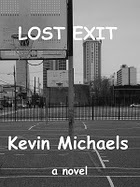
Lost Exit is my attempt at proving Thomas Wolfe wrong. I always believed that you can go home again, at least as a writer. The novel is about a self-destructive college basketball player named Timmy Davenport who comes home to Atlantic City for the summer. It takes place in the late 1990s as the city is transforming from a desolate, faded resort into an entertainment Mecca and Timmy feels like he doesn’t belong any more. His friends have changed, he’s unsure of where he’s going in life, and a bloody neighborhood rivalry between mob gangs has left a trail of bodies scattered throughout the town and might have something to do with his family. It’s all about lost opportunities and last chances in a city filled with drug deals gone bad, mobsters, cops, bullets, a past littered with pain and scars, and a family that has lost faith in him. Kind of a coming of age story that blends basketball and friendship with the emotional struggle of a character searching for his own identity while looking for love.

At the end of the day, Thomas Wolfe was right … you can’t go home again. Everything changes and nothing stays the same.

 
What was your motivation for writing it?

Aside from the love affair with the city where I grew up and some semi-auto-biographical aspects, it was a little bit of an homage to some of the local characters I grew up with — low-rent gamblers, mobsters, neighborhood basketball stars, and friends looking for direction and purpose in life. Most of whom never found what they were looking for. But the draw was creating Timmy Davenport — he’s a flawed character with a past filled with broken relationships, bad family dynamics, and pain so bad that at times he tried to kill himself. With his addictions and that hurt in his background, he was easy to visualize and I was drawn to his character. I never set out to write a sports book and making teen suicide a significant part of the story wasn’t my original intention, but the book took on a life of its own and charted its own course. And then there was that idea of coming home to Atlantic City …


How important is a good title?

A good title is key — that’s the first thing an author uses to hook a reader, followed by a good cover. Press releases and marketing plans and YouTube book trailers don’t matter much if your cover doesn’t leap off the bookshelf or out of the e-reader and grab the reader’s attention. The title worked for me on a couple of different levels. I loved the imagery of the main character and the people he comes in contact with being lost and in search of an identity or purpose. Timmy Davenport is a character searching for an identity, trying to figure out who he is, who loves him, and what he can do with his life.

And for anyone who ever lived in New Jersey, the typical question people from out of state ask is: ‘What’s your exit?’ (like where you live and who you are can defined by where you reside in relation to the major highways like the Garden State Parkway or New Jersey Turnpike).

And to set the record straight, we’re not all like the characters you see on The Sopranos, Boardwalk Empire, or Jersey Shore. If you want to piss off somebody from New Jersey, ask us how close our lives are to what you see on Jersey Shore and if we know Snooki.


Picture
_ What are your views on e-books?

The future is e-publishing. Time to embrace the change. Aside from the ease at getting books into print and the benefits of making more money, e-publishing allows writers to get their stories to market much faster (and isn’t that the goal of every writer: to get what we’ve written in front of readers …) without the obstacles and barriers put in place by the publishing establishment. E-publishing offers a realistic alternative for every writer who wants to bring their own stories to an audience hungry to find them. Lost Exit, a novel that agents and publishers told me would never be ‘commercially viable’, ‘mainstream enough’, or worth the ‘financial risk’ of publishing in print, has found an audience. It hasn’t been an overnight success, but it has gained momentum and keeps moving forward, even showing up on a few of Kindle’s Top 100 lists once in a while.

Instead of wasting hours and hours querying agents, submitting to publishers, and hoping for a chance that someone will read my sample chapters and synopsis, I have been able to become prolific. I am now doing the thing I always dreamed about doing: writing.


What aspects of marketing your book do you enjoy?

I love the new creativity involved in marketing books. It’s like building a brand. I love interviews and working with book bloggers/reviewers, and social media channels like Facebook and LinkedIn have been tremendous assets in the overall marketing of my book. Like buying a car, it gives readers a chance to go out and kick the tires … along those lines, I recently worked with a media company to create and film a book trailer that we just put out on YouTube so the audience can learn a little about Lost Exit.

Shameless plug: here’s the link.

I’m not on Twitter … I honestly don’t know how interesting I could be for an extended period of time, so tweeting is lost on me …


What are you currently working on?

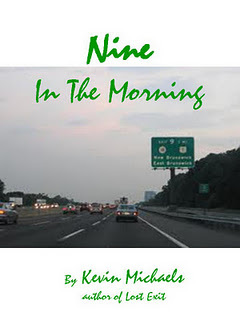
My second book is already finished and in the pipeline — entitled Nine In The Morning, it’s a collection of short stories that I’ve written (some that have been previously published as well as a few new ones). After that, I’ll be releasing a third book called Still Black Remains which is probably grittier and a little more hard-edged than Lost Exit, although it’s one that I’m proud of. Beyond that, I’ve got some short story commitments and then once those have been completed I’ll be sitting down to begin work on my fourth book (I have a strong idea about characters and plot, but I’m still fleshing out some of the direction and details). One of the things I love about the creative process is that you can start out at one point, thinking you know which way you’re going, and your story or the characters or some small aspect of what you’re writing can take you in an entirely different direction. That’s the fun part of the journey.

The other thing I’ve been working on is a community based organization I founded that develops literacy through the art of writing. We develop literacy, self-expression, and self-esteem, and give under-served teenagers and young adults in my area the opportunity to write their own stories which can inspire them to discover the strength and power of their own voices. For me, it’s a chance to make a difference.


How can we keep up to date with your news?

Other than knocking on my door and inviting me out for a drink, I can be found at Facebook and LinkedIn, as well as on my two blogs.

I post my fiction and periodic updates at A Cold Rush of Air, and I show up occasionally at my other blog: Sliding Down the Razor's Edge to offer my opinion and POV on topics not too earth-shattering in size, scope, or detail. And those few, sick depraved people who really want to know more are always welcome to email me.


What would your epitaph be?

'Damnit, I told you I didn’t feel well …’

Seriously — I’d like to hope that by the time that day comes, I’ll have made a difference by the words I’ve written and the things I’ve done. It’s all about giving back, at least a little.


Picture
_ Thanks for a great Q&A, Kevin, and many, many congratulations on the Pushcart Prize nominations.

Lost Exit is available from Amazon in the UK and the US.


2 Comments

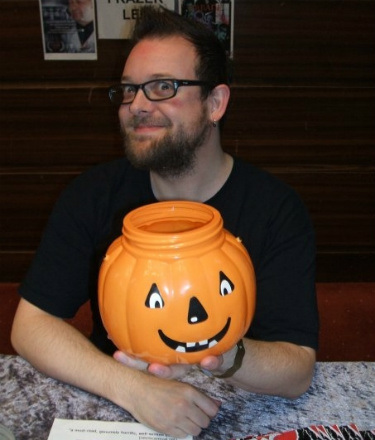
Q&A: Frazer Lee

3/12/2011

0 Comments

 
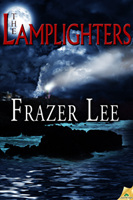
_For today’s Q&A I’m absolutely delighted to welcome Frazer Lee, the writer/director of the award-winning short horror movies On Edge, Red Lines, and Simone, and the horror/thriller feature film Panic Button. He is also the author of the recently published novel The Lamplighters.

Frazer was named one of the Top 12 UK Directors in Myspace.com’s ‘Movie Mash-up’ by an industry panel including Film4 and Vertigo Films. He has been described as ‘… one of the best last hopes for British horror …’ (MJSimpson.co.uk) and Chillerfest say ‘Frazer Lee is the next Clive Barker … FACT!’

No further introduction is needed, so over to you, Frazer.


Picture
_ Tell me about your book.

The Lamplighters is a horror story set on the beautiful Mediterranean idyll of Meditrine Island. Marla Neuborn travels there to take on the dream post-grad job of 'lamplighter', or caretaker, tending to the mansions — but soon discovers life on the island is not quite as idyllic as it was made out to be. A servile existence under a surveillance regime awaits her and much, much worse in the imposing shape of a fellow called 'The Skin Mechanic'.


What was your motivation for writing it?

The story wouldn't stop tap-tap-tapping inside the leaky cauldron of my skull until I sat down and told it.


How long did it take you to complete?


Writing and redrafting took the best part of two years, on and off. I was working on screenplay commissions concurrently so the actual writing time was closer to a year or so.


How much difference does an editor make?

I think the difference is vast because a rigorous editing process can make your book army strong and ready to do battle in the public arena. I consider myself lucky to have worked with executive editor and genre legend Don D'Auria on The Lamplighters. I had submitted the book to him at Leisure after he requested the full manuscript, but during that time the shit hit the fan at Leisure so the book and I followed Don to Samhain where he was launching the new horror line. Samhain has been making a lot of noise in the genre with some fantastic authors, both established and new, so I'm thrilled to be part of the launch.

Picture
_ What are your views on e-books?

I don't own an e-reader myself, I prefer the tactile pleasure of a physical book — or 'treebook' as some are calling them now, I love that name. So in that respect it has been weird to promote an e-book to readers when I'm waiting for the paperback to come out on 7th February! But the response has been fantastic and it is very cool to know that a reader can be checking out your book within seconds if they have an e-reader device. I saw proof copies on my laptop of course, but I always print off a hard copy of anything that I'm proofreading, be it a novel or a screenplay. I guess I spend so long looking at a screen in my working life that I still prefer to look at a printed page. But I dislike snobbery about what people are reading and the format they are reading it in — it's the fact that people are enjoying reading that's important I think. Unless they are reading inane tabloid newspapers or illegally downloaded copies of books of course ... :)


What are you reading now?

I just started reading the first in the Abarat sequence by Clive Barker, something I've been meaning to do for quite some time now. Prior to that I was lucky enough to read an as-yet unpublished epic, apocalyptic novel by Joseph D'Lacey. He is a fantastic talent and I urge you to seek out a copy of his novel Meat if you haven't already.

What are you currently working on?

Coming next is the movie novelization of Panic Button, based on my horror/thriller screenplay. The film is out now on DVD/Blu-ray in the UK to some amazing reviews. Other than that I am lining up a couple of movie gigs and am working on another horror novel.


How can we keep up to date with your news?

I blog occasionally at http://www.frazerlee.com
and please do drop by at my Facebook Page: http://www.facebook.com/AuthorFrazerLee and Twitter: http://twitter.com/frazer_lee


What would your epitaph be?

A musical headstone, rigged with a movement sensor to play 'Don't Fear The Reaper' by Blue Oyster Cult.


Picture
Thanks for a great Q&A, Frazer.

The Lamplighters is available from Amazon in the UK and the US, and also direct from the publisher. (I'm busy reading it, and thoroughly enjoying it. Reviews will be forthcoming in all the usual places.)

0 Comments
<<Previous
Forward>>

    Julie Morrigan

    Bestselling UK author of crime and horror titles.


    Buy Julie Morrigan paperbacks:
    Picture
    Picture
    Picture

    Buy Julie Morrigan ebooks:
    Picture
    Picture
    Picture
    Picture
    Picture
    Picture
    Picture
    Picture

    Archives

    December 2013
    October 2013
    August 2013
    July 2013
    January 2013
    December 2012
    November 2012
    October 2012
    September 2012
    August 2012
    July 2012
    June 2012
    May 2012
    April 2012
    March 2012
    February 2012
    January 2012
    December 2011
    November 2011
    October 2011

    Categories

    All
    At The Bijou
    Convictions
    Heartbreaker
    In Print
    Mcgraw
    Noir
    Off The Record
    Promotion
    Q&A
    Reviews

    RSS Feed

Powered by Create your own unique website with customizable templates.